



Executor Preparation Course
Welcome to the Official Executor Preparation Course for Canadians!
This free one-hour course is here to help you prepare for being an executor. It’s a big job, but the more you know in advance the easier, faster, and less frustrating it will be when you finally step into the role.
How It Works
You’ll go through five lessons during the Executor Preparation Course that will teach you the terminology, your tasks as an executor, your financial and legal responsibilities, and your obligation to the beneficiaries.
You’ll also collect important information using the template in your Executor Preparation Package, a resource you’ll want to keep in a safe place for the future.
Executor Preparation Course Package
Before you get started, enter your name and email below and we’ll send you your free Executor Preparation Course Package.
The Lesson Plan
1.Executor Role and Responsibilities
3. Beneficiaries and Charities
5. Essential Estate Information
Final Test
Each lesson comes with a skill-testing quiz. Pass them all and you’ll earn your official course certificate and a free Executor Guide.
Ready to get started?
Each lesson and quiz should take about 10 – 15 minutes to complete. Let’s dive right in!
Remember to bookmark this page for easy access if you want to finish your course later or share it with a family member.

What is an executor?
The executor is in charge of administering the estate. This includes arranging the funeral, reviewing the will, identifying the beneficiaries, identifying and settling the debts of the estate, paying taxes, and distributing the estate to the Beneficiaries. Closing a typical estate in Canada typically takes about two years.
What are the tasks of an executor?
There is a very long list of tasks for an executor to complete, but some of the most important are:
- Selling real estate
- Making funeral arrangements (and potentially paying for it until estate funds can be accessed.)
- Collecting and distributing possessions according to the wills instructions
- Settling debts with creditors
- Reviewing home insurance
- Obtain keys to any owned property and consider changing the locks
- Collect passwords to social media accounts, subscriptions, email, telephone billing, etc.
- Reviewing taxes from the past six years
- Filing taxes for the current year, and perhaps prior years
- Communicating with beneficiaries
- Reviewing the will for special requests like organ donation or charitable giving
- Finding care for pets
What is my legal responsibility as executor?
The executor has a fiduciary duty to the parties to the estate. A fiduciary duty is a much higher standard of care and performance than is typically required in a non-fiduciary role, because it involves the management and distribution of money belonging to other parties.
The required standard of care is often much higher than a person might generally exercise in respect of their own personal business.
Do I have a financial obligation?
People don’t typically think about the role of executor as having a personal financial risk but nothing could be further from the truth.
It’s important that people understand they are effectively pledging their own personal assets against a significant loss of estate value if attributed to their negligence in administering the estate as the executor.
If you are asking someone to act as executor on your behalf, it’s equally important to understand the imposition.
The Do’s and Don’ts
- You cannot use estate funds for personal expenses.
- You cannot choose how items are distributed to beneficiaries.
- You cannot determine your own executor compensation fee.
- You cannot remove a beneficiary from the will.
- You can seek reimbursement for expenses related to your executor duties, like traveling out of town for funeral arrangements.
- You can be a part of the fee decision between beneficiaries and other executors.
FAQs
- What is a testator? The testator is a person who has made a will.
- What is a beneficiary?A beneficiary is a person or organization that is entitled to receive some advantage under a will, sometimes a gift of money or property or use of property.
- What is a creditor? A creditor is an individual or organization to whom an estate owes a debt.
- What is an estate? An estate is the total property (both real and personal) that is owned by the decedent immediately prior to death.
- What is a joint account? Joint account means a bank or investment account owned by two people, and which passes into the hands of the survivor upon the death of the other owner. Jointly owned real estate has a similar feature. Joint accounts or joint ownership will often allow bank and investment accounts to pass outside of probate.
- What is litigation? Litigation means the process of taking legal action by taking a case to court so that a judgement can be made.
- What does probate mean? Probate is the process whereby a court establishes the validity of a will. Courts may levy a fee for probate which many people call “probate fee” or “probate tax”, and which is based upon the value of the estate. Probate is usually required by financial institutions and provincial land registry systems in order to transfer bank and investment accounts and change title to property. In Ontario, the expression used for “probate fee” is Estate Administration Tax.
- What happens when there is more than one executor? Two or more people can act as joint executors of a will. In this case, they must make all decisions together and sign all documents and cheques. It can delay the process and increase disputes, but it can also divide the work.

TEST YOURSELF: QUIZ #1
[wp_quiz id=”2374″]

What happens if the estate has unpaid debts?
Settling unpaid estate debts is one of the most important duties of an executor. You must use funds from the estate bank account to pay any outstanding debts BEFORE you give anything away to beneficiaries. If there are timely bills or debts that need to be paid off before the estate bank account can be set up, that might need to be paid for out of the executor’s pocket initially and reimbursed by the estate later.
What kind of debts are included?
A debt can be anything from an informal contract with a sibling that the testator borrowed money from to a line of credit with a bank. You’ll also have to pay for any regular bills that are sent to the deceased, such as:
- Mortgage payments
- Home insurance payments
- Condo ownership fees
- Cottage ownership fees, such as insurance and taxes
- Utility bills
- Subscription services (i.e. movie and music services)
- Car payments
- Car insurance
- Cell phone services
- Internet services
- Appliance or furniture payments
If you are paying out-of-pocket for any of these bills, keep a very detailed record of receipts and dates so you can be paid back from the estate once the account is accessible (which can take a few months in some cases.)
Some services you’ll want to cancel to avoid additional payments (i.e. subscription services) while others you may still need. For example, if you’ve decided to sell the family home you may want to continue to pay the utility bills to ensure heat and light for showings and avoid frozen pipe damage.
What if there are not enough funds to cover the debt?
A common roadblock to closing the estate is when the funds fall short of covering all debts. This is known as an insolvent estate. There are a few options for you as the executor in this case:
- You can liquidate certain estate assets and use the funds to pay off the debt. (Consult your lawyer and beneficiaries about which assets to use to keep it fair and avoid disputes.)
- Be sure to pay your creditors according to priority. There is an order you must follow: 1. Secured creditors (i.e. a bank), 2. Reasonable funeral and testamentary expenses, 3. Administration costs related to the estate, 4. A levy on dividends paid to secured, preferred and unsecured creditors, 5. Preferred creditors (i.e. a landlord), 6. and Unsecured creditors (i.e. a personal loan).
- If you do not pay creditors in the proper order, the executor could end up paying the bill for a lower-priority debt that was not supposed to be given priority.
- IMPORTANT: It’s highly recommended that you seek a legal professional with experience with insolvent estates and bankruptcy to reduce potential litigation issues.
Learn more about the priority of creditors in Canada’s Bankruptcy and Insolvency Act.
Do you have to notify creditors?
As we mentioned before, there are two types of debts: formal and informal. Informal debts, like a mortgage payment, are typically forwarded to the executor and can be paid for as they come in. A formal debt is a bit different.
If the estate must go through probate (which means the will must be presented to the court to prove it is genuine), then the executor is required to notify creditors of the testator’s passing. You’ll also want to set a deadline that all formal debts need to be submitted by, which is usually a four to six month window. This can only be done once probate is granted.
Can creditors dispute your decisions?
Yes. If a creditor has submitted a formal debt and you (along with your legal council) have reviewed it and decided it is not a legitimate debt, or that the amount owing is incorrect, the creditor can dispute this decision. This is a common area of estate litigation, so be sure to record when and why all decisions were made just in case. This is a good practice to protect yourself throughout your role as executor.
What if the testator owned a business with debt?
If the testator owned their own business, it adds a layer of complexity to the estate which typically requires additional assistance from financial and legal professionals. We highly recommend that you seek legal assistance in these cases.
The type and size of business dictates a lot about the situation. Typically for a larger company, a succession plan would be included in the will which would pass responsibility for the business management and decisions on to someone like a business partner or advisor. In a scenario where the testator was the sole employee and sole proprietor of the company, any debts of the company could become the responsibility of the executor. For example, bills for website hosting services, retail space rent, or outsourced work to a contractor would need to be paid by the estate.
TEST YOURSELF: QUIZ #2
[wp_quiz id=”2867″]

Who are the beneficiaries of a will?
The beneficiaries are any people, pets, or charitable organizations named in the will who will receive estate funds or assets.
As the executor, you are legally and financially responsible to the beneficiaries. Communicating with your beneficiaries and ensuring they are aware of your progress with closing the estate, paying debts, and selling any assets is extremely important.
In order to manage expectations, give your beneficiaries a timeline for when you expect them to receive their payment so they can plan accordingly.
Can a pet be a beneficiary?
Yes! It has become more common than ever to include provisions for your pet in your will. It’s already a responsibility of the executor to secure care for any pets, but funds could also be left towards their care (like expensive medication, vet bills, and grooming.) There are even several famous cases where pets were left considerable sums of money – millions of dollars – by their wealthy owners.
How does it work if a charity is named in the will?
Beneficiaries can also be charitable organizations named in the will, not just personal relations. They need to be notified and kept updated on the estate closure progress just like any other beneficiary. You should also note:
- Each charity has their own guidelines and specific requirements they must follow when receiving a posthumous donation. You will have to contact them to discuss their specific process – some will be more strict than others.
- You need to verify the charity by confirming their status in Canada’s registered charity database.
- The charity will monitor the accounting to ensure the donation or gift is not reduced due to unsubstantiated executor, accounting, or legal expenses.
- The charity has the right to ask questions, receive a copy of the will, know who is acting as executor, and the right to a court review of the accounts if they would like to file a dispute.
Can a beneficiary file a complaint about an executor?
Yes, this happens very often and is the most common cause of estate disputes today.
If beneficiaries feel you’ve mismanaged funds or assets, taken a beyond-reasonable time to perform tasks, or disagree with your interpretation of the will instructions, they can file a dispute.
That’s why it’s critical that you keep track of all of your decisions and actions as an executor – like a diary, with dates and people involved. You should also give progress updates to your beneficiaries letting them know changes to the closure timeline and potential obstacles.
TEST YOURSELF: QUIZ #3
[wp_quiz id=”2913″]

What is an estate dispute?
Dividing up sentimental heirlooms, selling the family home, and dealing with estate debts are all sensitive subjects that can cause serious conflict.
Unfortunately, estate disputes are a common occurrence in Canada. That means a dispute could be filed against the estate and as the executor, you will have to handle it. This is why being an executor is such an important role – you’ll have many legal and financial responsibilities.
Estate disputes can take years and thousands of dollars in legal fees to settle, delaying the closing of the estate and frustrating everyone involved.
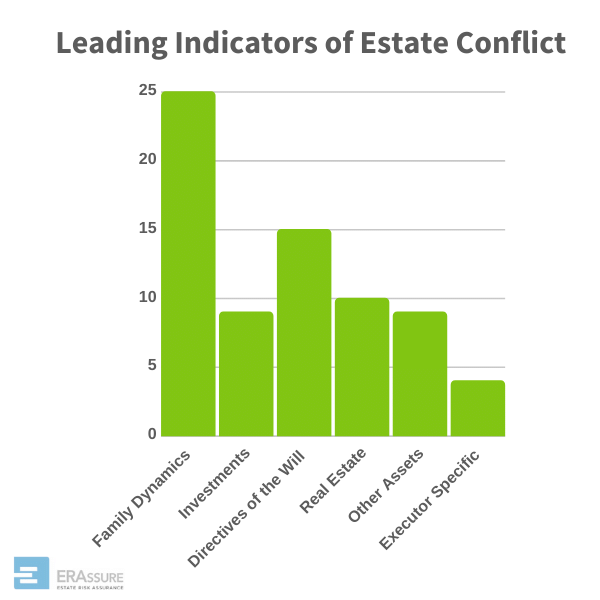
What causes an estate dispute?
Estate disputes are one of the biggest liabilities when it comes to being an executor. There are five leading causes of executor conflicts in Canada: family dynamics, directives of the will, real estate, investments, other assets, and executor specific reasons.
Can an executor be removed?
Yes, an executor can be removed from their role.
A dispute can be filed against an executor if someone thinks they are not acting in the best interest of the estate or if they feel the executor is unfit for the role. For example, if the executor of the estate has dementia or a drug addiction.
How to Handle Estate Disputes
If you follow these best practices, you will be as prepared as possible in case of an estate battle:
- Keep an accurate record of all of your decisions, actions, and communications as executor with accurate dates, times, and names.
- Take an inventory of estate assets ASAP before allowing friends and family to remove items themselves. Store these assets appropriately until all estate debts have been settled.
- Follow the correct procedure for posting a notice to creditors and follow the proper order when repaying debts.
- Review the will and your plan for carrying it out with a legal professional.
- Make sure the will of the estate includes an Estate Services Plan to protect you legally and financially in an estate dispute. If it does not, you can look into securing Executor Liability Insurance yourself.
- Do not miss deadlines and be aware of time sensitive tasks.
- Keep beneficiaries up-to-date on any estate proceedings.
What is Executor Liability Insurance?
Executors need protection from the legal and financial responsibilities that come with the role. Executor Liability Insurance can either be included in a will as an Estate Services Plan, obtained by the executor, or pre-arranged by the testator while they are alive.
Having this protection in place means you won’t be paying out of pocket for legal fees or administrative mistakes you’ve made by accident. For example, if you miss a payment deadline causing the estate to pay a penalty fee and additional interest, you could be held responsible for that loss.
TEST YOURSELF: QUIZ #4
[wp_quiz id=”2985″]

Welcome to the final lesson!
You’ve learned the types of tasks you’ll do as an executor and some of the risks involved. Now let’s focus on the essential estate information that you’ll need to collect in order to perform your tasks.
We recommend you sit down with the testator of the estate and use your Executor Preparation Course Package as a fill-in-the-blank template to collect this information. It will be much easier for you to locate this list together ahead of time than by yourself later.
1. Estate Information
- Deceased’s Full Name
- Full Address
- Date of Birth
- Date of Death
- Passport Number
- SIN Number
- Employer
- Where the will is stored
- Who the funeral arrangements are with
- Bank and Branch
- Safety deposit box
- Executor and Co-Executor
- Spouse of the Deceased (if applicable)
2. Key Contacts
- Lawyer
- Financial Advisor
- Accountant
- Insurance Broker
- Key Business Contact
- Key Family Member
- Executor Liability Insurance Contact (1-855-636-3777)
- Power of Attorney (name, address, phone number)
3. Banking and Insurance
- Financial Institution (name, account type, account #)
- Insurance Information (company, agent, policy number, beneficiary, face amount)
- Investment Information (company, broker, account #)
- Pension/Annuity Information (company, date of deposit, amount)
4. Properties
- Address/Location
- Property Manager
- Mortgage Holder
5. Other Asset Information
- Type of Asset
- Key Contact
- Location (Address)
- Instructions
6. Login Credentials
- Online Banking
- Telephone
- Internet
- Social Media
- Utilities
- Music Subscription
- Streaming Services
If the testator of the will is also a business owner, that makes things more complex and adds several items to this list. Be sure you are aware of the succession plan for their business operations and the proper contacts that would assist with it. Legal council is strongly advised in these situations.
Now that we’ve gone over the estate essentials, you’re ready to take the final test!

Are you ready?
We’ve covered all of the basics of being an executor in Canada, now let’s see what you remember and what you don’t.
(PS, if you didn’t get your Executor Preparation Course Package at the beginning you’ll want to download it now because it’s full of important notes from the course for you to keep!)
[wp_quiz id=”2990″]
Congratulations, You’re Done!
You’ve successfully completed the Executor Preparation Course! Now keep the estate information you’ve collected and your course package in a safe place for the future.
You should also download and bookmark our Official Executor Guide for Canadians. It walks you though all of your executor tasks step-by-step so that you complete them correctly and on-time.
More Estate Planning Resources
- The Official Executor Guide for Canadians
- How to Prepare Your Estate for Your Executor
- Will Preparation Guide
- Inheritance Planning Guide
- Find a Lawyer Tool
- How do I choose my executor?
- Cottage co-ownership solutions
- Passing of Accounts: How does it work?
- Reopening an estate
- What happens when there’s no will?
- What are joint executors?
- List of executor duties
- How to include pets in your will